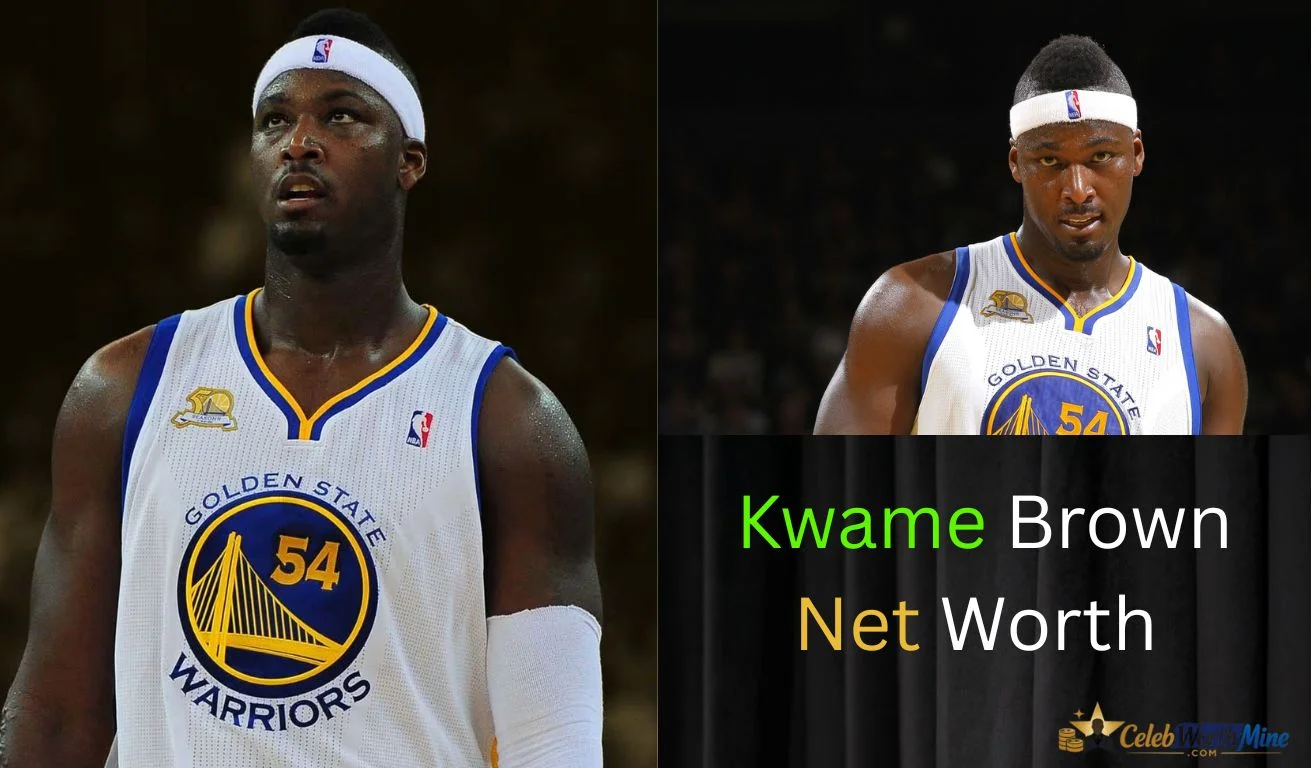
When people search “Kwame Brown net worth 2026”, they want one clear answer: how much did the former No. 1 NBA draft pick actually make — and how much of that wealth remains today? Kwame Brown earned over $63 million in total NBA salary during his professional basketball career, yet his current estimated net worth reflects the real financial journey behind those headline contracts.
As the first overall selection in the 2001 NBA Draft by the Washington Wizards, Brown entered the league with massive expectations, a guaranteed rookie contract, and long-term earning potential. Over 12 seasons, he signed multiple NBA contracts, played key frontcourt roles, and built substantial career earnings through salary, bonuses, and team agreements.
However, understanding Kwame Brown’s net worth requires more than just looking at contract totals. Taxes, agent fees, career transitions, injuries, and post-retirement ventures all shape an athlete’s real financial position. In this in-depth breakdown, we’ll analyze his NBA salary history, biggest contracts, endorsement income, business ventures, and how his wealth evolved from rookie prospect to retired professional.
If you’re looking for a complete, transparent, and data-driven analysis of Kwame Brown’s career earnings and financial growth, this guide covers everything you need to know.
What Is Kwame Brown’s Net Worth?
Kwame Brown net worth: Estimated $8–10 million (2026).
Kwame Brown built most of his wealth through NBA salary earnings, long-term player contracts, and performance bonuses during his professional basketball career. Although he earned over $60 million in total NBA contracts, taxes, lifestyle costs, and career transitions affected his overall accumulated wealth. Today, his income sources include former league earnings, independent media activity, and private investments.
Who Is Kwame Brown?
Kwame Brown is a former American professional basketball player best known for being the first overall pick in the 2001 NBA Draft straight out of high school. Born on March 10, 1982, in Charleston, South Carolina, he entered the league as one of the most highly anticipated young prospects of his generation.
Standing 6-foot-11 and playing the center/power forward position, Brown was selected No. 1 overall by the Washington Wizards, becoming one of the few prep-to-pro athletes drafted at the top spot. During his NBA career, he also played for the Los Angeles Lakers and the Memphis Grizzlies, along with several other franchises.
Over 12 seasons in the league, Kwame Brown built a career as a rotational big man, defensive presence, and rebounder. While his professional basketball journey came with intense media scrutiny due to his No. 1 draft status, he remained part of the NBA ecosystem for more than a decade — an achievement that reflects durability, adaptability, and long-term league value.
Kwame Brown NBA Salary & Career Earnings
Kwame Brown entered the league as the No. 1 overall pick in the 2001 NBA Draft, selected by the Washington Wizards. As a top draft selection coming straight from high school, he signed a guaranteed rookie-scale contract under the NBA’s collective bargaining agreement (CBA), which significantly shaped his early career earnings.
Rookie Contract Details
As the first overall pick, Brown secured a multi-year rookie contract valued at roughly $17 million, fully guaranteed with team options in later years. This deal placed him among the highest-paid rookies of his draft class and immediately positioned him financially ahead of most incoming players. His early NBA salary reflected both his draft status and the league’s structured rookie pay scale at the time.
Total NBA Career Earnings
Over a 12-season professional basketball career, Brown earned an estimated $63+ million in total NBA salary from player contracts alone. This figure includes base salary, guaranteed money, and structured multi-year agreements across several franchises.
His earnings came primarily from:
- Rookie-scale contract (No. 1 pick structure)
- Mid-career multi-year deals
- Veteran contracts and short-term agreements
From a financial analysis perspective, gross career earnings differ significantly from net worth, as taxes, agent fees, training expenses, lifestyle costs, and post-career transitions reduce retained wealth. That distinction explains why his accumulated net worth is lower than his total NBA salary.
Biggest Contracts Breakdown
After his initial deal, Brown signed several notable contracts during his time as a rotational big man in the league. One of his more substantial contracts came during his mid-career years, where multi-year agreements pushed his annual salary into the multi-million-dollar range. These contracts reflected his role as a defensive center, rebounder, and experienced frontcourt presence rather than a franchise cornerstone.
While he did not secure a maximum contract extension, his ability to remain in the NBA for over a decade ensured consistent salary income — something many first-round picks do not achieve long term.
Endorsements & Business Ventures
Beyond NBA salary earnings, Kwame Brown also generated income through brand associations, independent ventures, and digital media activity. While he was never positioned as a global endorsement powerhouse, his career as a former No. 1 overall draft pick created commercial visibility that extended beyond on-court performance.
Brand Deals During NBA Career
During his early years in the league, Brown benefited from the marketing exposure that typically follows a top draft selection. Like many NBA players of that era, endorsement income likely included:
- Athletic apparel partnerships
- Local sponsorship agreements
- Promotional appearances and basketball camps
However, unlike superstar athletes who secure long-term signature shoe deals or national advertising campaigns, Brown’s endorsement portfolio appears to have remained moderate. This distinction is important when analyzing Kwame Brown net worth, as endorsement revenue plays a major role in wealth growth for elite NBA players.
Post-Retirement Ventures
After stepping away from professional basketball, Brown shifted toward private business activity and independent ventures. Many former NBA players diversify their income through:
- Entrepreneurial investments
- Consulting or training programs
- Small business ownership
- Agricultural or land-based projects
Publicly available information suggests he has explored self-directed ventures rather than corporate-backed enterprises. This entrepreneurial path reflects a transition from athlete salary income to self-managed business revenue streams, which can vary significantly year to year.
Media & YouTube Presence
In recent years, Brown gained renewed public attention through digital commentary and independent media appearances. His online presence — including long-form video discussions — introduced an additional revenue model based on:
- Platform monetization
- Advertising share
- Audience-driven engagement
For former athletes, media platforms can serve as a modern extension of brand value, allowing them to control their narrative and build direct-to-audience income channels. While not comparable to peak NBA salary levels, this digital monetization contributes to overall financial sustainability.
Real Estate & Asset Investments
Like many professional athletes, real estate often plays a role in long-term wealth management. Property ownership, land investments, or residential holdings can act as asset-based financial security rather than liquid income.
However, without verified public financial disclosures, it is more accurate to categorize any real estate activity as private asset management rather than a confirmed large-scale property portfolio.
Why Kwame Brown’s Net Worth Is Lower Than Expected
When people search “Kwame Brown net worth”, many assume that a former No. 1 overall NBA draft pick would have a fortune comparable to Hall-of-Fame players. However, total career salary and long-term accumulated wealth are very different financial metrics.
Kwame Brown earned more than $63 million in NBA contracts, yet his estimated net worth today is significantly lower. Here’s why:
1. Career Expectations vs. Reality
Being drafted first overall by the Washington Wizards in 2001 placed enormous expectations on Brown. Franchise cornerstone players typically secure:
- Maximum contract extensions
- All-Star bonuses
- Long-term endorsement deals
- Playoff performance incentives
While Brown maintained a long professional basketball career, he did not develop into a max-contract superstar. Instead, he transitioned into a role player and defensive big man, which limited his access to elite-level salary growth and major sponsorship opportunities.
This gap between draft hype and on-court production plays a direct role in understanding his overall financial trajectory.
2. Injuries & Role Changes
Like many NBA athletes, Brown dealt with physical setbacks and shifting team roles throughout his career. Injuries can affect:
- Contract negotiations
- Playing time
- Statistical performance
- Long-term earning leverage
As he moved between teams — including the Los Angeles Lakers — his role evolved from developmental prospect to rotational contributor. While this allowed him to stay in the league for over a decade, it reduced the likelihood of securing a long-term franchise-defining contract.
3. Financial Reality of NBA Earnings
Another key factor often overlooked in “NBA player net worth” discussions is the difference between gross salary and retained wealth.
From total career earnings, athletes typically pay:
- Federal and state taxes
- Agent commissions
- Management and legal fees
- Training and travel expenses
- Lifestyle and family obligations
After these deductions, retained capital is significantly lower than headline contract numbers. This explains why a player with $60+ million in contracts may have a net worth under $15 million.
Financial Lessons from Kwame Brown’s Career
Brown’s financial journey offers broader lessons about athlete wealth management:
- Draft position does not guarantee lifetime wealth
- Longevity in the NBA provides stability, but not superstar income
- Smart asset allocation matters more than gross earnings
- Media perception can differ from financial reality
From an economic standpoint, his career reflects sustainability rather than explosive wealth growth.
Kwame Brown Net Worth Over the Years
Below is a simplified financial timeline showing how his earnings and estimated wealth evolved over time:
| Year | Career Phase | Financial Snapshot |
| 2001 | Rookie contract (No. 1 pick) | Signed ~$17M guaranteed rookie-scale deal |
| 2006 | Lakers period | Multi-million annual salary as rotational big man |
| 2013 | NBA retirement phase | Career earnings surpassed $63M total |
| 2026 | Current estimate | Net worth estimated at $8–10 million |
Early Life & High School Career
Kwame Brown was born on March 10, 1982, in Charleston, South Carolina, and raised in a modest environment that shaped his competitive mindset early on. Growing up in a challenging setting, basketball became both an outlet and a pathway to opportunity.
He attended Glynn Academy in Brunswick, Georgia, where he quickly developed into one of the most dominant high school basketball prospects in the country. Standing nearly 7 feet tall with strong rebounding instincts and interior scoring ability, Brown gained national recognition as an elite prep athlete.
During his senior season, he averaged impressive points and rebounds per game, earning:
- McDonald’s All-American honors
- Parade All-American recognition
- National high school player attention from NBA scouts
His rapid development led him to declare for the 2001 NBA Draft directly out of high school — a bold move during an era when prep-to-pro transitions were rare but highly scrutinized. His draft decision significantly influenced his early financial trajectory and long-term Kwame Brown net worth, as being selected first overall dramatically increased his rookie contract value.
From an NBA scouting perspective, Brown was viewed as a physically gifted center with long-term upside, which explains why he became the No. 1 overall draft pick despite his young age and limited experience against college-level competition.
Legal & Financial Troubles
When analyzing Kwame Brown net worth 2026, it’s important to separate verified information from speculation. Like many professional athletes who enter the league at a young age, Brown faced personal and professional challenges throughout his life.
Legal Issues
During his early years, Brown encountered legal matters that generated media attention. While these incidents did not permanently derail his NBA career, they contributed to public scrutiny and added pressure during critical development years.
For professional athletes, legal disputes can impact:
- Public image
- Endorsement opportunities
- Contract negotiations
- Long-term brand value
However, Brown remained active in the NBA for over a decade, indicating that these issues did not eliminate his professional standing within the league.
Financial Pressures & Wealth Management
Another important factor in former NBA player net worth discussions is financial management. Entering the league at 19 years old with a multi-million-dollar contract can create sudden wealth challenges, including:
- Family financial responsibilities
- Lifestyle inflation
- Investment risk exposure
- Business decision inexperience
While there is no verified public record suggesting catastrophic financial collapse, it is widely understood in sports finance analysis that young athletes often navigate steep learning curves in wealth preservation.
In Brown’s case, the combination of high expectations, career role shifts, and normal athlete expense structures likely contributed to the difference between total NBA career earnings and his present-day net worth estimate.